RESEARCH
Are Nanotube Simulations the Next Filter Frontier?
Simulated nanotubes show promise for capturing glyphosate as water treatment shifts toward precision tools
6 Nov 2025
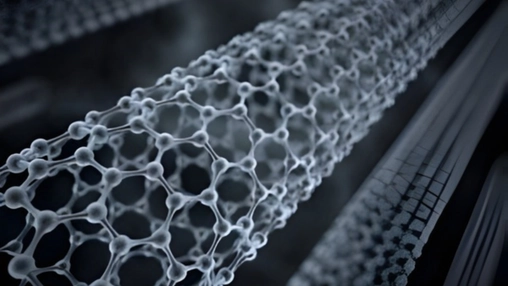
A new preprint examining glyphosate binding on modified carbon nanotubes is drawing measured interest across the water sector, not as a near term breakthrough but as a clearer map of where precision filtration research may be heading. The study, posted on arXiv and not yet peer reviewed, presents a proof of concept via simulation that shows how hydroxyl functionalization can strengthen glyphosate adsorption on single walled nanotubes.
The research relies entirely on molecular modeling. By tuning oxygen containing surface groups, the authors modeled stronger glyphosate binding across pH ranges typical of natural and treated waters. The results are intriguing, yet still conceptual. No lab scale or field scale tests have been reported, and real world relevance remains unvalidated. Even so, the work highlights how computational tools are increasingly shaping early design strategies for next generation filtration media.
This direction resonates with broader industry trends. Firms such as Allonnia and Cyclopure are not pursuing carbon nanotube systems for glyphosate but are emblematic of a shift toward more targeted contaminant solutions. Their commercial technologies, spanning bioremediation, foam fractionation and cyclodextrin based sorbents, reflect a growing expectation that treatment materials should be purpose built rather than one size fits all.
The interest arrives as regulators tighten limits on pesticides, PFAS and other emerging pollutants while utilities face mounting pressure to modernize treatment systems. Researchers and analysts alike track early material science concepts, since proof of concept studies can foreshadow the directions that later partnerships, pilot programs and investment cycles may explore.
Yet the gaps between simulation and deployment remain substantial. Safety, scalability, regeneration, cost and environmental fate are all unresolved for nanotube based systems. The preprint itself offers no experimental validation and does not address whether functionalized nanotubes could be synthesized, integrated into media or recovered safely at treatment scale. These uncertainties underscore that the work is an initial technical sketch rather than a ready pathway to commercial filtration.
Still, by sharpening how specific contaminant interactions might be engineered, the study contributes to a growing body of research that points toward more selective and efficient filtration materials in the long term. If future laboratory and pilot testing confirm the modeled behavior, precision engineered media could play a role in redefining how challenging pollutants are captured and removed.
Latest News
2 Feb 2026
AI Tools Are Changing the Pace of Environmental Cleanup30 Jan 2026
Can Algorithms Clean Up America’s Toxic Sites?22 Jan 2026
Forever No More? PFAS Cleanup Targets Final Destruction20 Jan 2026
The Great Cleanup Grab: Consolidation Surges in US Remediation
Related News
INSIGHTS
2 Feb 2026
AI Tools Are Changing the Pace of Environmental Cleanup
RESEARCH
30 Jan 2026
Can Algorithms Clean Up America’s Toxic Sites?
MARKET TRENDS
22 Jan 2026
Forever No More? PFAS Cleanup Targets Final Destruction
SUBSCRIBE FOR UPDATES
By submitting, you agree to receive email communications from the event organizers, including upcoming promotions and discounted tickets, news, and access to related events.