INNOVATION
From Filters to Finality: PFAS Destruction Arrives
Early deployments of on-site PFAS destruction signal a move toward lasting, source-level cleanup
9 Jan 2026
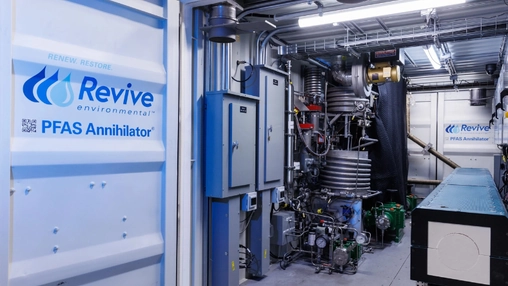
A long-standing problem in environmental remediation is beginning to show signs of change. In parts of the US, early commercial deployments of technologies designed to destroy PFAS, a class of persistent industrial chemicals, are drawing attention from site owners and regulators seeking more permanent solutions.
The shift centres on on-site PFAS destruction systems developed by Battelle and deployed with partners such as Revive Environmental. Unlike conventional methods that filter PFAS from water and then store or transport the contaminated waste, these systems treat the chemicals at the source. The process breaks down PFAS into simpler byproducts, reducing reliance on disposal facilities and long-term containment.
The emergence of these technologies comes as regulatory pressure increases. The US Environmental Protection Agency has tightened some PFAS limits and proposed further rules, prompting airports, utilities, landfills and industrial operators to reassess their exposure to future compliance costs and legal risk. In that context, approaches that merely relocate contamination are increasingly seen as temporary.
Analysts say interest in destruction technologies reflects a broader change in how remediation success is measured. Clients are no longer focused only on how quickly PFAS can be removed from water, but on whether it can be eliminated altogether. On-site treatment also reduces the risks and costs associated with transporting hazardous materials.
Battelle has framed its approach as addressing PFAS as a chemical problem rather than a waste management issue, a distinction that has found support among regulators and site owners. Revive Environmental has promoted the systems as adaptable across several applications, including firefighting foam residues and landfill leachate, supporting early uptake across sectors.
The impact so far is modest but noticeable. Environmental services firms are reviewing their technology offerings, while investors are tracking solutions that align with tighter regulation and the goal of reducing long-term liabilities. Obstacles remain, including high upfront costs, energy use and questions around scaling. However, these are often weighed against the financial and reputational risks of indefinite containment.
As regulatory clarity improves and more performance data becomes available, industry observers expect PFAS destruction to play a larger role in cleanup strategies. Further pilot projects and partnerships are likely. For a sector under pressure to deliver lasting results, the gradual move from containment to destruction marks a potential turning point.
Latest News
2 Feb 2026
AI Tools Are Changing the Pace of Environmental Cleanup30 Jan 2026
Can Algorithms Clean Up America’s Toxic Sites?22 Jan 2026
Forever No More? PFAS Cleanup Targets Final Destruction20 Jan 2026
The Great Cleanup Grab: Consolidation Surges in US Remediation
Related News

INSIGHTS
2 Feb 2026
AI Tools Are Changing the Pace of Environmental Cleanup
RESEARCH
30 Jan 2026
Can Algorithms Clean Up America’s Toxic Sites?
MARKET TRENDS
22 Jan 2026
Forever No More? PFAS Cleanup Targets Final Destruction
SUBSCRIBE FOR UPDATES
By submitting, you agree to receive email communications from the event organizers, including upcoming promotions and discounted tickets, news, and access to related events.